Big Guy Display Font for Bold Web Headers
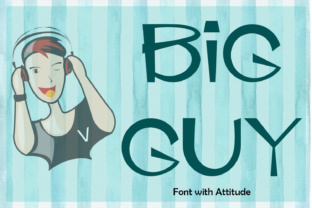
When selecting Fonts for a high-impact digital project, the Big Guy typeface stands out as a versatile Decorative option that balances personality with clarity. As web designers and UI creators, we often struggle to find display typography that commands attention without sacrificing the clean aesthetic required for modern interfaces. Big Guy solves this by offering a funky yet structured appearance, making it an ideal candidate for hero sections, landing page headlines, and brand-focused web experiences where visual hierarchy is paramount.
Using Big Guy for High-Conversion Landing Pages
Incorporating Big Guy into your Fonts library can significantly elevate the conversion potential of your Decorative design elements on sales pages. This typeface possesses a distinct bouncy appeal that draws the eye immediately, which is crucial for the first three seconds of a user's visit to a landing page. Unlike stiff, corporate sans serifs that blend into the background, Big Guy creates an instant emotional connection, suggesting a brand that is approachable, creative, and confident. When used in hero headers or above-the-fold value propositions, this font ensures that your core message is not just read, but felt. The clean yet casual feel prevents the design from appearing too chaotic, maintaining enough professionalism to build trust while injecting the energy needed to drive action.
Optimizing Visual Hierarchy in Digital Products
Effective UI design relies heavily on the strategic use of Fonts to guide user behavior, and Big Guy serves as a powerful tool for establishing clear visual Decorative hierarchies. In complex app screens or SaaS dashboards, differentiating between primary actions and secondary information is vital. By reserving Big Guy for section headings, call-to-action buttons, or key feature highlights, you create natural scanning paths for the user. Its unique character shapes break up the monotony of standard interface text, allowing users to quickly locate important content. However, because it is a display font, it works best when paired with a neutral, highly legible sans serif for body copy. This contrast ensures that while Big Guy captures attention, the supporting text remains easy to digest on both desktop and mobile devices.
Building a Consistent Online Identity with Big Guy
For online store owners and creative entrepreneurs, maintaining a consistent brand voice across various Fonts and platforms is essential, and Big Guy offers a cohesive Decorative style that adapts well to different contexts. Whether you are designing banner ads, social media graphics, or email headers, using this specific typeface ensures immediate brand recognition. The funky nature of the font makes it particularly suitable for boutiques, coaching businesses, and lifestyle brands that want to distance themselves from generic corporate templates. When applied to logo text or favicon designs, Big Guy adds a layer of uniqueness that helps your brand stand out in crowded marketplaces. Its versatility allows it to function effectively on light backgrounds for a fresh look or dark backgrounds for a bold, premium statement, ensuring your online identity remains strong regardless of the medium.
Pairing Big Guy with Complementary Typography
To maximize the effectiveness of Big Guy within a broader suite of Fonts, understanding how to pair this Decorative asset with other typefaces is key to professional web design. Since Big Guy carries significant visual weight and character, it pairs exceptionally well with minimalist geometric sans serifs that do not compete for attention. For editorial-style blogs or magazine layouts, combining it with a crisp serif font for long-form content can create a sophisticated yet playful dynamic. The goal is to let Big Guy handle the heavy lifting of emotion and attraction, while the secondary font handles readability and flow. This balance prevents the interface from feeling overwhelming and ensures that the "bouncy appeal" enhances rather than distracts from the user experience. Designers should test these pairings across different screen sizes to ensure the contrast remains effective on mobile viewports.
Enhancing Readability and Mobile Responsiveness
While Big Guy is a standout choice among Fonts for its style, applying this Decorative typeface responsibly on mobile devices requires careful attention to sizing and spacing. Display fonts can sometimes lose legibility at smaller scales, so it is recommended to use Big Guy primarily for headlines and short phrases rather than dense paragraphs. On responsive layouts, ensure that line height and letter spacing are adjusted to prevent characters from touching or feeling cramped on narrow smartphone screens. The clean lines of Big Guy generally hold up well against image overlays, provided there is sufficient contrast between the text color and the background. For accessibility, always verify that the font weight and color choices meet WCAG guidelines, ensuring that the funky aesthetic does not compromise the ability of users with visual impairments to navigate your site.
Licensing and Commercial Use for Web Projects
Before integrating Big Guy into client projects or commercial Fonts packages, it is important to review the licensing terms associated with this Decorative asset. Professional web designers must ensure they have the appropriate webfont licenses to embed the typeface directly into websites, landing pages, and digital products without legal risk. Many premium fonts offer specific desktop and web licenses, and understanding the difference is crucial for agencies managing multiple client accounts. Using Big Guy legally protects your business and ensures that the creative work you produce remains secure and compliant. Once licensed, the font files can be optimized for web performance, ensuring fast load times that contribute to better SEO rankings and a smoother user experience. Investing in the correct license unlocks the full potential of Big Guy, allowing you to deploy it confidently across global campaigns and high-traffic e-commerce stores.